Sunday, December 18, 2011

A Man Who Chose to "Just Cheer!"

Once upon a time (May 31st, 1819 to be exact), a great, yet common man was born. His name was Walt Whitman.


Whitman was raised by his father Walter Whitman, who was a carpenter and "sometime farmer" (Reynolds 3), and his mother Lousia Whitman. Whitman's brother, George, acknowledged that "[Whitman's] relations with his father were always friendly, always good" (Reynolds 4). It's also important to impart that Whitman reflected on his father's "freethinking attitudes toward religion" (Reynolds 4), which evidently took lead toward Whitman's acceptance of all men's beliefs, but also allowed Whitman to create a personal and strong faith for himself, which is evident in his poems in Leaves of Grass. Whitman also highly regarded his mother and has described her as "imaginative" and "a good story teller," which evidently sparked Whitman's creative mind as a poet.


As Whitman grew up and began to create a life for himself, he tried a hand at carpentry and also real estate; however, he "could not turn a profit" from either (Reynolds 4). Whitman became an office boy and was given a subscription to a "circulating library" (Reynolds 6). Whitman was apparently entranced with the literature there and soon became an apprentice to an editor of a newspaper, ultimately ending in his learning how to print. Later in life, Whitman received the job of a traveling schoolteacher, but always fell back to jobs in journalism. Throughout this part of Whitman's life, it appears that he traveled to many places: from his home in West Hills area of Long Island, to Brooklyn, to the places his schoolteacher job took him, to New Orleans, and many more throughout the course of his life. Whitman's stints in numerous careers and lifetime travels allowed him a wider perspective, enabling him to empathize with those in different positions (geographically and otherwise). This background also gives leeway to Whitman's writing which appeals to every man, showing an ability to understand different areas of discourse.


While Whitman pranced from job to job, he had "jott[ed] poetic lines in his notebook," which "he carried with him...in the New York area" (Reynolds 10). The lines were merely written "spontaneously, in the passion of the moment" (Reynolds 10). However, it's important to note that the poems followed "loose rhythms of feeling and speech," which contrasted with his earlier poems written for various newspapers in Manhattan that used "traditional rhyme and meter" (Reynolds 8). This is important because Whitman is later known as "the father of free verse" (Reynolds ix). Motivated by his "immediate age" (Whitman) with the "slavery debate and its alarming social and political repercussions" (Reynolds 11), Whitman began to collect his poetry and to create the first edition of Leaves of Grass, which consisted of "twelve untitled poems and a preface" ("Walt Whitman"). This work was to "repair a society he believed was unraveling" (Reynolds 11). The collection was "unconventional," with "erratic" use of grammar, but eventually became a staple for American literature.


During the emergence of his poetry, however, the country "failed to absorb him," (Reynolds 13) but Whitman's goal of reaching the public would not rest with the initial critics' opinions. Leaves of Grass continued to grow. Whitman spent the rest of his life adding and making revisions to Leaves of Grass. The editions changed formatting: he added "elegance" (Reynolds 16), and new organization. Also, as time went on, Whitman tried to create new poems that would unify his nation; however, "he sensed that the new poems would be no more effective...than his previous ones had been" (Reynolds 19). When the Civil War broke out, Whitman began to confront some of the problems raised by the war. He believed that the war "had proven the dignity of the American spirit," but he was also "appalled by the materialism and political corruption of post-war America" (Reynolds 21). Also, in 1862, Whitman traveled "to care for his brother who had been wounded in the war" ("Walt Whitman"). These new ideas and experiences spawned further editions of Leaves of Grass.  


After the final edition of Leaves of Grass had been composed, Whitman settled down in a home located in Camden (Jeffares). In Camden Whitman prepared "his final volume of poems and prose, Good-Bye, My Fancy," and later died in 1892. (Jeffares) "At the time of his death, Whitman was more respected in Europe than in his own country" (Jeffares), however, today, modern American readers of Whitman's Leaves of Grass still respond to "his preoccupation with the problem of preserving the individual's integrity amid the pressures of mass civilization" (Jeffares). Walt Whitman is now known as one America's greatest poets.

Works Cited:
Jeffares, Alexander. "Walt Whitman Biography - Facts, Birthday, Life Story - Biography.com." Famous Biographies & TV Shows - Biography.com. Britannica, 1994. Web. 13 Dec. 2011. <http://www.biography.com/people/walt-whitman-9530126?page=4>.

Reynolds, David S. "Life." Walt Whitman. Oxford: Oxford UP, 2005. Print.
"Walt Whitman." Poets.org - Poetry, Poems, Bios & More. Academy of American Poets, 1997. Web. 13 Dec. 2011. <http://www.poets.org/poet.php/prmPID/126>.

Images:

http://filipspagnoli.files.wordpress.com/2008/06/walt-whitman.jpg

Remember What America Was?

In order to fully grasp Walt Whitman's Leaves of Grass, one must understand the purpose behind the poetry, the motivation: Whitman's surroundings--the happenings of our America from 1855-1891.

Whitman had a strong response to the historical events of his time; he wanted "his verse to reflect popular tastes, urban experience, and democratic politics" (Reynolds 24). However, numerous poems in the book depict events, places, and figures far more positively than Whitman had expressed through his spoken opinion at the time. This suggests that Whitman wrote the collection of poems not as a testament of greatness to represent America, but rather to present "a transfigured America";"Leaves of Grass was his democratic utopia" (Reynolds 34). 

During the writing process of Whitman's Leaves of Grass, many events were happening to transform America. Whitman was especially effected by the temperance movement, city life, separate cultures and class divisions, the decisions of the government, and most importantly, the slavery debate.

The temperance movement was organized "to encourage moderation in the consumption of intoxicating liquors or press for complete abstinence" (The Temperance Movement). The movement led to prohibition laws, but most were diminished by 1868. However, the movement effected Whitman enough for it to be explored within his writings: “He imported the images and attitudes of temperance into his poetry, associating drunkards with impure or disgusting things" (Reynolds 25).


Whitman was also clearly influenced by the city life of America at the time. He expressed that the streets of American cities are “mud sinks in the winter and dust bowls in the summer” ( Reynolds 27). There were also animals roaming the streets and the cities were overall unsanitary. This context provides basis for the first perspective Whitman implores in his writing: an environmental perspective. While Whitman was clearly disgusted by the city life during the time he wrote the poem “Crossing Brooklyn Ferry," but the poem “cleanses the city…through refreshing nature imagery” (Reynolds 28). This suggests that Whitman took strong issue with the lack of sanitation in his country, but changed this problem in his ideal America.


 During the 1850s-1891, there were obviously many changing cultures, class divisions, and gangs. These were all social elements that Whitman was intrigued by. In the book Walt Whitman, written by David Reynolds, Reynolds heavily suggests that Whitman was affected by the b'hoy culture. Reynolds writes, “His whole persona in Leaves of Grass—wicked rather than conventionally virtuous, free, smart, prone to slang and vigorous outbursts—reflects the b’hoy culture” (Reynolds 30). This suggests that the culture of Whitman's time was strongly apparent and important enough to reflect and comment on, which leads to the second perspective Whitman takes: a social perspective. His poems present "an improved version of street types” (Reynolds 30), which suggests that Whitman took issue with certain gangs and cultures that occupied the streets of America.


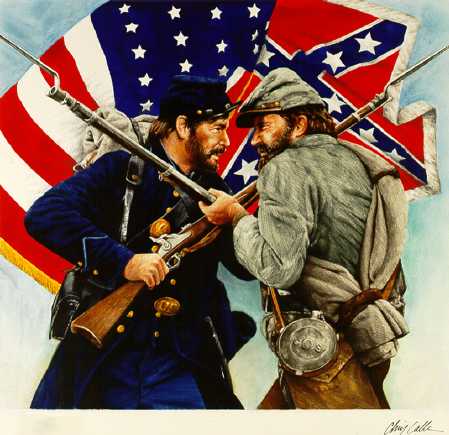
Other  than city life and gang members, Whitman was influenced by the American government making many decisions which effected all people of the United States. The 1850's was a time of heavy political corruption: “a time of vote-buying, wire pulling, graft, and patronage” (Reynolds 33). There were changes in political parties, examples being the end of the Whig party, the Compromise of 1850, and numerous wars ("Political Realignment in the 1850s"). Extremely important during Whitman's time was the "Civil War and the rise of the United States as a commercial and political power" (Sparknotes). Whitman takes on a third perspective, through political commentary in his writing: “'The genius of the United States', he wrote, was not in presidents or legislatures but 'always most in the common people'” (Reynolds 37).


The final extreme happening of Whitman's time was the immersion and debate of slavery. Events surrounding this included the 1850 Compromise, the immersion of the free soil party, fugitive slave law, and Jim Crow Laws. During this time new opinions were being created over colored people; some expressed that "blacks and whites were adapted to different latitudes” (Klammer 93). However, Whitman's poetry hadn't discussed the events so powerfully in his writing until "the nation erupted in 1854 over the Kansas Nebraska Act and the case of the fugitive slave Anthony Burns" (Klammer 85). Whitman's strongest commentary surrounded slavery. “Whitmans own attitudes about blacks at this time mirrored those of a large segment of the Northern population,” (Klammer 94) which was against abolitionist movements and in favor of the Union. Whitman's poetry and political participation, for example joining an “antislavery wing of the Democratic Party,” (Reynolds 35) shows his strong passion for the removal of slaves.


"Remember," Whitman once said, "The book [Leaves of Grass] arose out of my life in Brooklyn and New York from 1838 to 1853, absorbing a million people, for fifteen years, with an intimacy, an eagerness, an abandon, probably never equaled" (Reynolds 24). This shows the importance of the historical and cultural context of Whitman's time, and how without it, the book may not have brought optimism and hope to so many of America's people.


Works Cited

Shore”, Blue Ontario’s. "SparkNotes: Whitman’s Poetry: Context." SparkNotes: Today's Most Popular Study Guides. Web. 18 Dec. 2011. <http://www.sparknotes.com/poetry/whitman/context.html>.
Kent, Chancellor. "The Temperance Movement." United States American History. Web. 18 Dec. 2011. <http://www.u-s-history.com/pages/h1054.html>.
Reynolds, David S. "Life." Walt Whitman. Oxford: Oxford UP, 2005. Print.
"U.S. History I: Political Realignment in the 1850s." Get Homework Help with CliffsNotes Study Guides. Web. 18 Dec. 2011. <http://www.cliffsnotes.com/study_guide/Political-Realignment-in-the-1850s.topicArticleId-25073,articleId-25061.html>.
Klammer, Martin. Whitman, Slavery and the Emergence of "Leaves of Grass" University Park (Pa.): Pennsylvania State UP, 1995. Print.

Pictures:
http://www.mainepuzzles.com/Images/American-Jigsaw-Puzzles/6158_United_States_of_America_Jigsaw_Puzzle_lg.jpg
http://apush-wiki-marlborough-school.wikispaces.com/file/view/temperance_1.jpg/68757975/temperance_1.jpg
http://www.columbia.edu/cu/alumni/Magazine/Spring2004/Images/baxterst.jpg
http://media.boweryboogie.com/uploads/2010/11/mose-bhoy.jpg
http://www.soldierstudies.org/images/webquest/civil%20war%20soldiers.jpg
http://upload.wikimedia.org/wikipedia/commons/thumb/5/51/Legree.png/222px-Legree.png

So...what was that book Leaves of Grass trying to say...?

When reading through Whitman's Leaves of Grass, you will feel enlightened. Spirits of joy and optimism will ignite in you, and your ideal America will be presented poetically before your eyes. Whitman makes sure this emotional reaction will occur by developing certain themes: equality, nationalism, mortality versus immortality (the soul), and individuality versus the whole.


Regarding equality, Whitman takes on the idea that everyone in America is equal, no matter what race, class, or gender. This is important to Whitman's text because he is creating an ideal America; by describing this utopia there is a consistent theme of equality, demonstrating how important viewing each other as equals is to living in an ideal America. In numerous poems, Whitman uses the first person; this rhetorical strategy is to emphasize equality within Leaves of Grass. David Reynolds suggests, "The ‘I’ celebrates himself but also announces his complete equality with others" (Reynolds 35). An example of this within the text would be in his poem "Song of Myself." Whitman writes, "I behold the picturesque giant and love him, and I do not stop there, I go with the team also" (Whitman 35). The "I" in the above quote suggests we all love the picturesque giant, who symbolizes a negro man, and we also are one that goes with the team, which represents a group of negro men. Equality is also presented more obviously within the poems. Whitman blatantly describes the equality we must share by referring to all men and women as his neighbors (Whitman 21), and also by listing so many of America's inhabitants: "the machinist...the young fellow..the youth..." and saying that together those inhabitants "weave the song of myself" (Whitman 39). If this unified self represents complete equality with others, the song of all of America's inhabitants sings of that equality.


Once equality is achieved, all men and women can come together to rejoice in their country, which results in another theme throughout Whitman's writing: nationalism. Nationalism is the love for ones country and an overall "patriotic feeling" (Google dictionary). Using this as a theme in his writing, Whitman suggests that you can not only love your equals but you must rejoice in your country with them; it is not enough to be in your country, but you must love it. Whitman wrote that "it is a painful thing to love a man or woman to excess, and yet it satisfies, it is great, but there is something else very great, it makes the whole coincide, it, magnificent, beyond materials, with continuous hands sweeps and provides for all" (Whitman 19).  This "something else" is America, and Whitman believed that if you love it and sacrifice for it, it will never let you down; it will always provide. Whitman also demonstrates this nationalism by the beautiful descriptions he provides of America. He pronounces the perfection of America's nature: "I do not want the constellations any nearer, I know they are very well where they are," (Whitman 127) and also consistently describes America as a spiritual being, who "serves me with breath to speak," and its land's spirits, living and dead, "would be evident and amicable with me." Therefore, not only should one rejoice of America but one should feel how it provides and spiritually serves us all.


Perceiving America as a spiritual entity provides basis for a third theme in Leaves of Grass: mortality versus immortality. Whitman not only describes America as a spiritual entity, but one that is also immortal. This raises the question of what is immortal and mortal within America? Numerous writers suggest that we must face our own mortality, that we are all going to die; however, Whitman counteracts that position. Whitman suggests that we should recognize ourselves as immortal: "See, your own shape and countenance, persons, substances, beasts, the trees, the running rivers, the rocks and sands. All hold spiritual joys and afterwards loosen them; How can the real body ever die and be buried?" (Whitman 22). This quote recognizes the substance of the people, but also the soul, which will forever be immortal. The theme of mortality/immortality plays heavily with the theme of the soul. In his poem "I Sing the Body Electric," he recognizes the beauty of the body and the roles it plays: "To see him pass conveys as much as the best poem, perhaps more, you linger to see his back..." (Whitman 81). Whitman never outright says that this beautiful body will die (even though his audience knows it will), but instead optimistically suggests that "Of him countless immortal lives with countless embodiments and enjoyments" will form (Whitman 85). It is important for Whitman to present that it is not the death of the body that is important, rather it is the immortality of the soul that matters. In "Song of Myself", Whitman recognizes the death on his poet's doorstep, "you bitter hug of mortality" (Whitman 75), but what's important is that he can "smell the white roses sweet-scented and growing," which signify the immortality of his soul.


The final theme of Whitman's grand work Leaves of Grass is individuality versus the whole. This theme can be found everywhere within the work, starting with the title. The title suggests that the grass is the whole, all of the people in America, and the leaves are the individuals that create that whole. Due to Whitman's themes of equality and nationalism, one would think that Whitman would emphasize the whole: that we should love one another and our country and simply act as an organized whole. However, what is important in Whitman's writing is identifying the individual's role in society and the whole role of society. Whitman uses this theme of the individual versus the whole on a grand spectrum. He uses it in specific situations like describing events in war: "I take part, I see and hear the whole" (Whitman 59); and also to relate to the whole world: "I am not an earth nor an adjunct of an earth, I am the mate and companion of people" (Whitman 31), realizing himself as a part (a companion), but also realizing himself as part of the whole of the world (not an attachment to the earth).


Work Cited:

Whitman, Walt, Michael Moon, Edward Sculley Bradley, and Harold William Blodgett.Leaves of Grass and Other Writings: Authoritative Texts : Other Poetry and Prose : Criticism. New York: W. W. Norton &, 2002. 77. Print.
Reynolds, David S. "Life." Walt Whitman. Oxford: Oxford UP, 2005. Print.

Pictures:
http://high.heels.com/wp-content/uploads/2008/03/green-grass.jpg
http://img2.blogblog.com/img/video_object.png
https://blogger.googleusercontent.com/img/b/R29vZ2xl/AVvXsEhD_DVnj9YXGNUzRdCehHEw_zbXfvRb0-4LcgSLru095ZJi6KH9PIeRWuUQmfZ0i5dMx_-7YZoAs7qnojwSH091DzTQQaWSWMSRZSEIA9ZW5ZfaU8gYP4A9av8lmQjhj2YoRNoIgUJjF6KW/s1600-r/eaa.jpg
http://img2.blogblog.com/img/video_object.png

Think About Death!


51

The past and present wilt--I have fill'd them, emptied them,
And proceed to fill my next fold of the future.


Listener up there! what have you to confide to me?
Look in my face while I snuff the sidle of evening,
(Talk honestly, no one else hears you, and I stay only a minute longer.)


Do I contradict myself?
Very well then I contradict myself,
(I am large, I contain multitudes.)


I concentrate toward them that are nigh, I wait on the door-slab.


Who has done his day's work? who will soonest be through with his supper?
Who wishes to walk with me?


Will you speak before I am gone? will you prove already too late?


52

The spotted hawk swoops by and accuses me, he complains of my gab and my loitering.

I too am not a bit tamed, I too am untranslatable,
I sound my barbaric yawp over the roofs of the world.

The last scud of day holds back for me,
It flings my likeness after the rest and true as any on the shadow'd wilds,
It coaxes me to the vapor and the dusk.

I depart as air, I shake my white locks as the runaway sun,
I effuse my flesh in eddies, and drift it in lacy jags.

I bequeath myself to the dirt to grow from the grass I love,
If you want me again look for me under your boot-soles.

You will hardly know who I am or what I mean,
But I shall be good health to you nevertheless,
And filter and fibre your blood.

Failing to fetch me at first keep encouraged,
Missing me one place search another,
I stop somewhere waiting for you.

This is an incredibly emotional passage from Whitman's "Song of Myself." It reflects the real heart of Whitman's character, the poet, who represents all Americans, and the purpose of life. The passage embodies themes of mortality versus immortality and individuality versus the whole. Through use of narration, metaphor, and impeccable tone, Whitman grabs his audience in an intense moment of life or death.

At the beginning of the passage, the poet addresses God while lying on his deathbed, and asks what the meaning of life is: "Listener up there! what have you to confide to me?" (77). The poet recognizes he will only be alive "a minute longer" (77); he is faced with his mortality and is prepared for the answers God may give him. The poet remains curious to whether or not God will give him the answers, and then addresses the reader asking what he/she will do before or after he dies: "Will you speak before I am gone? will you prove already too late?" (77). Poem 52 further focuses on the poet on his deathbed; but, instead of describing his peaceful lingering, the poet is now described as a loiterer, which suggests that he must embrace death and fall to the hands of the Lord. Soon enough, the poet dies: "I depart as air, I shake my white locks at the runaway sun, I effuse my flesh in eddies, and drift it in lacy jags." The poet ends by saying that even after his death he will live on in the grass "under your boot-soles" (77). 

The reflections of mortality are very clear within the poem: the character is faced with death. However, even though this body is about to die, Whitman emphasizes that the poet's soul will be immortal. This is shown by the lines Whitman writes after the figure dies. The lines aren't despairing or focused on a conclusion, rather they share words for the future: "You will hardly know who I am or what I mean, but I shall be good health to you nevertheless, and filter and fibre your blood." This suggests that the soul will forever nurture those who are still alive. Robert Sickels explains that "the poem cumulatively chronicles humanity's inextricable place in the regenerative natural world" (Sickels), which explains that we are regenerated in death; our energy is stricken from our bodies but humanity's souls will live on in the natural world. This theme of people as immortal beings is heavily stressed throughout the entirety of Leaves of Grass.

The theme of individuality versus the whole is also present within this passage. It is first apparent when the poet writes, "I am large, I contain multitudes" (77). This suggests the wholeness of a person, but also the many parts inside them. This theme relates to the overall theme and message of the book that there is a whole, the grass/America, and its parts, the leaves/America's inhabitants. The passage further relates to the "leaves of grass" message since the poet compares himself to the grass: "I bequeath myself to the dirt to grow from the grass I love" (77).  This presents the idea to the reader that, in death, the souls of our beings still grow among America's living people. The dead figure does not become a separated part from the whole in death, but rather grows as a part of a new whole as a leaf in the grass.


Work Cited
Whitman, Walt, Michael Moon, Edward Sculley Bradley, and Harold William Blodgett.Leaves of Grass and Other Writings: Authoritative Texts : Other Poetry and Prose : Criticism. New York: W. W. Norton &, 2002. 77. Print.
Sickels, Robert C. "Whitman's Song of Myself." MLA International Bibliography. Web. <http://web.ebscohost.com/ehost/detail?sid=2933ef9e-ddc6-4ff6-9642-34c201e73061%40sessionmgr13&vid=1&hid=7&bdata=JnNpdGU9ZWhvc3QtbGl2ZQ%3d%3d#db=mzh&AN=2000060523>.
Pictures:
http://www.sxc.hu/pic/m/h/ho/hotblack/880580_field_of_grass.jpg
http://swankybase.com/wp-content/uploads/2009/12/Timberland-6-Inch-Zip-Earthkeepers-Boot-On-Grass.jpg

How Could I Possibly Know All of This?

Works Cited

Jeffares, Alexander. "Walt Whitman Biography - Facts, Birthday, Life Story - Biography.com." Famous Biographies & TV Shows - Biography.com. Britannica, 1994. Web. 13 Dec. 2011. <http://www.biography.com/people/walt-whitman-9530126?page=4>.
This website provided me with information on Whitman's life right before his death. This was important information for me to have because all of the books I borrowed from the library simply stated his death in Camden.

Kent, Chancellor. "The Temperance Movement." United States American History. Web. 18 Dec. 2011. <http://www.u-s-history.com/pages/h1054.html>.
This website provided me with information about the Temperance Movement: its cause for starting and ending and the effects it created. It contributed to my understanding of why Whitman was effected by the movement, and how that played a role in his writing.

            Klammer, Martin. Whitman, Slavery and the Emergence of "Leaves of Grass"University Park (Pa.): Pennsylvania State UP, 1995. Print.
            This book, an insanely descriptive account of Whitman’s connection to slavery, provided me with an abundance of information. The book provided a linear description of events surrounding slavery during Whitman’s lifetime and also how Whitman reflected on these events in his writing.

Reynolds, David S. Walt Whitman. Oxford: Oxford UP, 2005. Print.
This book was a remarkable account of the life and works of Walt Whitman. The first chapters dealt with his life, while the following chapters analyzed and discussed the text as a literary work.

Sickels, Robert C. "Whitman's Song of Myself." MLA International Bibliography. Web. <http://web.ebscohost.com/ehost/detail?sid=2933ef9e-ddc6-4ff6-9642-34c201e73061%40sessionmgr13&vid=1&hid=7&bdata=JnNpdGU9ZWhvc3QtbGl2ZQ%3d%3d#db=mzh&AN=2000060523>.
This article from the MLA International Bibliography was a detailed analysis of Whitman’s poem “Song of Myself.” It provided strong literary discourse for understanding the complexities of the poem.