
Whitman had a strong response to the historical events of his time; he wanted "his verse to reflect popular tastes, urban experience, and democratic politics" (Reynolds 24). However, numerous poems in the book depict events, places, and figures far more positively than Whitman had expressed through his spoken opinion at the time. This suggests that Whitman wrote the collection of poems not as a testament of greatness to represent America, but rather to present "a transfigured America";"Leaves of Grass was his democratic utopia" (Reynolds 34).
During the writing process of Whitman's Leaves of Grass, many events were happening to transform America. Whitman was especially effected by the temperance movement, city life, separate cultures and class divisions, the decisions of the government, and most importantly, the slavery debate.
The temperance movement was organized "to encourage moderation in the consumption of intoxicating liquors or press for complete abstinence" (The Temperance Movement). The movement led to prohibition laws, but most were diminished by 1868. However, the movement effected Whitman enough for it to be explored within his writings: “He imported the images and attitudes of temperance into his poetry, associating drunkards with impure or disgusting things" (Reynolds 25).

Whitman was also clearly influenced by the city life of America at the time. He expressed that the streets of American cities are “mud sinks in the winter and dust bowls in the summer” ( Reynolds 27). There were also animals roaming the streets and the cities were overall unsanitary. This context provides basis for the first perspective Whitman implores in his writing: an environmental perspective. While Whitman was clearly disgusted by the city life during the time he wrote the poem “Crossing Brooklyn Ferry," but the poem “cleanses the city…through refreshing nature imagery” (Reynolds 28). This suggests that Whitman took strong issue with the lack of sanitation in his country, but changed this problem in his ideal America.


Other than city life and gang members, Whitman was influenced by the American government making many decisions which effected all people of the United States. The 1850's was a time of heavy political corruption: “a time of vote-buying, wire pulling, graft, and patronage” (Reynolds 33). There were changes in political parties, examples being the end of the Whig party, the Compromise of 1850, and numerous wars ("Political Realignment in the 1850s"). Extremely important during Whitman's time was the "Civil War and the rise of the United States as a commercial and political power" (Sparknotes). Whitman takes on a third perspective, through political commentary in his writing: “'The genius of the United States', he wrote, was not in presidents or legislatures but 'always most in the common people'” (Reynolds 37).
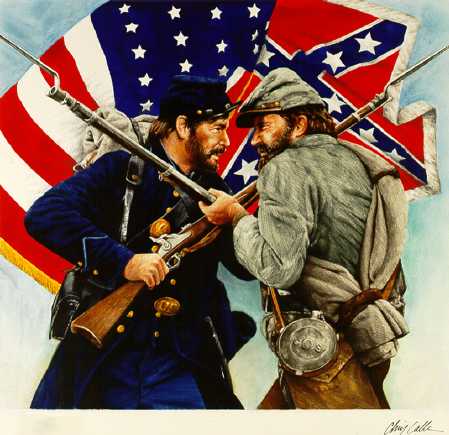
The final extreme happening of Whitman's time was the immersion and debate of slavery. Events surrounding this included the 1850 Compromise, the immersion of the free soil party, fugitive slave law, and Jim Crow Laws. During this time new opinions were being created over colored people; some expressed that "blacks and whites were adapted to different latitudes” (Klammer 93). However, Whitman's poetry hadn't discussed the events so powerfully in his writing until "the nation erupted in 1854 over the Kansas Nebraska Act and the case of the fugitive slave Anthony Burns" (Klammer 85). Whitman's strongest commentary surrounded slavery. “Whitmans own attitudes about blacks at this time mirrored those of a large segment of the Northern population,” (Klammer 94) which was against abolitionist movements and in favor of the Union. Whitman's poetry and political participation, for example joining an “antislavery wing of the Democratic Party,” (Reynolds 35) shows his strong passion for the removal of slaves.

"Remember," Whitman once said, "The book [Leaves of Grass] arose out of my life in Brooklyn and New York from 1838 to 1853, absorbing a million people, for fifteen years, with an intimacy, an eagerness, an abandon, probably never equaled" (Reynolds 24). This shows the importance of the historical and cultural context of Whitman's time, and how without it, the book may not have brought optimism and hope to so many of America's people.
Works Cited
Shore”, Blue Ontario’s. "SparkNotes: Whitman’s Poetry: Context." SparkNotes: Today's Most Popular Study Guides. Web. 18 Dec. 2011. <http://www.sparknotes.com/poetry/whitman/context.html>.
Kent, Chancellor. "The Temperance Movement." United States American History. Web. 18 Dec. 2011. <http://www.u-s-history.com/pages/h1054.html>.
Reynolds, David S. "Life." Walt Whitman. Oxford: Oxford UP, 2005. Print.
"U.S. History I: Political Realignment in the 1850s." Get Homework Help with CliffsNotes Study Guides. Web. 18 Dec. 2011. <http://www.cliffsnotes.com/study_guide/Political-Realignment-in-the-1850s.topicArticleId-25073,articleId-25061.html>.
Klammer, Martin. Whitman, Slavery and the Emergence of "Leaves of Grass" University Park (Pa.): Pennsylvania State UP, 1995. Print.
Pictures:
http://www.mainepuzzles.com/Images/American-Jigsaw-Puzzles/6158_United_States_of_America_Jigsaw_Puzzle_lg.jpg
http://apush-wiki-marlborough-school.wikispaces.com/file/view/temperance_1.jpg/68757975/temperance_1.jpg
http://www.columbia.edu/cu/alumni/Magazine/Spring2004/Images/baxterst.jpg
http://media.boweryboogie.com/uploads/2010/11/mose-bhoy.jpg
http://www.soldierstudies.org/images/webquest/civil%20war%20soldiers.jpg
http://upload.wikimedia.org/wikipedia/commons/thumb/5/51/Legree.png/222px-Legree.png

No comments:
Post a Comment